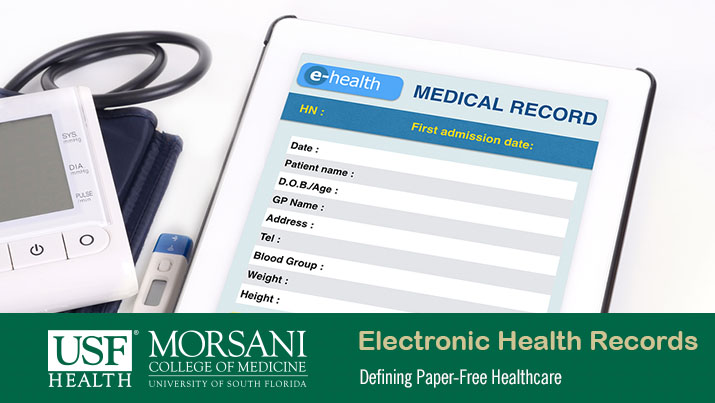
Electronic health records (EHRs) are digital versions of patient health information that are used and maintained by healthcare providers across clinical settings. EHR systems are designed to help healthcare organizations securely document, store, access, and share patient information to support care coordination and operational efficiency.
An EHR may include information such as:
- Patient demographics and contact information
- Vital signs and medical history
- Allergies and immunizations
- Current and past medications
- Laboratory and radiology results
- Clinical notes and treatment plans
Unlike traditional paper records, EHR systems are intended to support information sharing across authorized healthcare providers and care teams, helping improve access to patient information throughout the care continuum.
Today, EHR technology plays a central role in healthcare operations, clinical workflows, digital health initiatives, and healthcare analytics.
The Evolution of Electronic Health Records
The development of EHR systems began decades ago as healthcare organizations explored ways to improve recordkeeping, data access, and communication between providers.
Early electronic record systems emerged in the late 1960s and early 1970s, including projects such as the Regenstrief Medical Record System developed at the Regenstrief Institute. These early systems aimed to address several challenges associated with paper-based records, including limited accessibility, fragmented information, and administrative inefficiencies.
Over time, advances in healthcare technology, federal digital health initiatives, and increased demand for coordinated care contributed to the widespread adoption of EHR systems across hospitals, physician practices, and healthcare networks.
Today, EHR platforms support a wide range of clinical, operational, and administrative functions throughout healthcare organizations.
How EHRs Are Used in Modern Healthcare
Modern EHR systems support more than digital record storage. They are integrated into many aspects of healthcare delivery and organizational operations.
Common uses of EHR systems include:
- Supporting clinical documentation and care coordination
- Managing medication and allergy information
- Providing access to laboratory and imaging results
- Facilitating communication between providers and patients
- Supporting scheduling, billing, and administrative workflows
- Enabling healthcare analytics and reporting initiatives
EHR systems are also increasingly connected with telehealth platforms, patient engagement tools, and healthcare analytics technologies.
Current Trends in Electronic Health Records
As healthcare technology continues to evolve, EHR systems are adapting to support new models of care delivery, data sharing, and digital communication.
Cloud-Based EHR Platforms
Many healthcare organizations now use cloud-based or hybrid EHR environments to support scalability, remote access, system updates, and interoperability across healthcare settings.
Improved Patient Portals
Patient portals allow individuals to securely access portions of their health information online. Depending on the system, patients may be able to:
- Review test results
- Communicate with providers
- Schedule appointments
- Access visit summaries
- Pay medical bills electronically
These tools support greater patient engagement and digital access to healthcare information.
Telehealth Integration
Telehealth has become an increasingly integrated component of healthcare delivery. Many EHR systems now support virtual visits, remote patient monitoring, and digital communication between patients and providers.
Mobile Accessibility
Modern EHR platforms increasingly prioritize mobile accessibility and workflow efficiency, allowing healthcare professionals to securely access patient information using tablets, smartphones, and other mobile devices.
Interoperability and Data Sharing
One major focus of modern healthcare technology is interoperability — the ability of systems and applications to exchange and interpret shared health information securely and effectively.
Improved interoperability can help healthcare organizations support care coordination, reduce duplicate testing, and improve access to patient records across healthcare environments.
Emerging Technologies in EHR Systems
Healthcare organizations are also exploring how emerging technologies may enhance EHR functionality and healthcare operations.
Examples include:
- AI-assisted clinical documentation tools
- Predictive analytics and clinical decision support
- Integration with wearable health devices
- Population health reporting tools
- Cybersecurity and data protection enhancements
These technologies continue shaping how healthcare organizations manage patient information and support clinical workflows.
The Role of EHRs in Healthcare Analytics
EHR systems generate large volumes of healthcare data that can support analytics initiatives across hospitals and health systems.
Healthcare organizations may use EHR data to:
- Evaluate operational trends
- Support quality improvement initiatives
- Analyze patient populations
- Monitor resource utilization
- Inform strategic planning efforts
As healthcare analytics continues expanding, EHR systems remain an important source of clinical and operational data used throughout the healthcare industry.
The Future of Electronic Health Records
Healthcare organizations continue evolving how EHR systems support communication, care coordination, analytics, and patient engagement.
Future developments may include greater interoperability between healthcare systems, expanded use of AI-supported tools, improved user experience design, and increased integration between digital health technologies and patient care platforms.
As healthcare delivery becomes increasingly data-driven, EHR systems are expected to remain central to how healthcare organizations manage information, coordinate care, and support operational decision-making.
Learn More About Healthcare Analytics and Informatics
Electronic health records play an important role in healthcare analytics, informatics, and digital health operations. Professionals working in these areas may interact with EHR systems to support data analysis, operational workflows, and healthcare technology initiatives.
Explore USF Health Online programs to learn more about healthcare analytics, healthcare informatics, and related fields in digital healthcare technology.