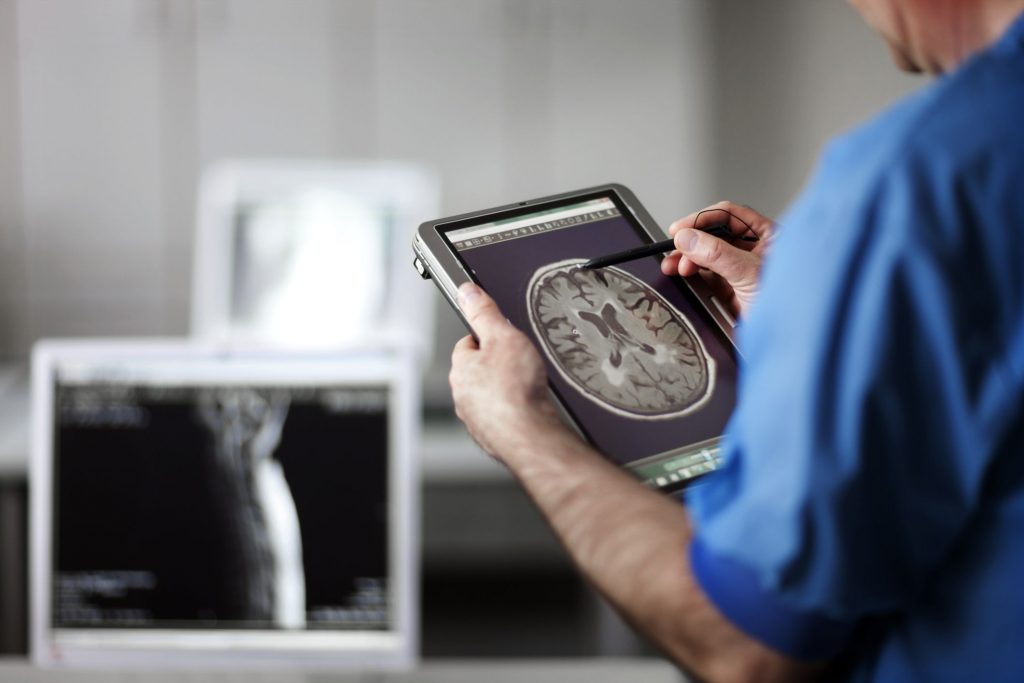
While technology is having a significant impact on healthcare, you’d be hard-pressed to find an area where innovation is expected to make a bigger difference than in radiology. New techniques combined with imaging informatics can result in better outcomes for patients and a reduced workload for radiologists.
Much in the way that electronic healthcare records forever changed how medical facilities track patient information, innovative technology and imaging informatics are expected to change radiology. How soon? Computer scientist Geoffrey Hinton told The New Yorker in 2017 that machines would soon make humans obsolete in the medical imaging field.
As things tend to go with these types of predictions, that is not yet the case. Part of the issue is that digital imaging and sharing of information faces the same issues of interoperability and security faced by medical records.
Still, changes are coming. One sign of this is Research and Markets adding Medical Imaging Quarterly to its offerings. The quarterly reports publication focuses on analyzing the impact of new technology on diagnostic imaging, image-guided therapies and imaging informatics segments.
The Current State of Informatics in Radiology
Medical Imaging Quarterly notes that “the medical imaging and informatics industry is evolving rapidly, and new products and solutions are launched every other day.” It ties this trend into the shift in healthcare from a fee-for-service to value-based payment system. As with many innovations in technology, there is a great opportunity for cost savings.
That said, there remain many issues to address. Recently, the Radiological Society of North America (RSNA), Carequality and the Sequoia Project created technical standards for the exchange of medical images (called the Imaging Data Exchange Implementation Guide Supplement).
The guide reported that the most frequent technology used for medical image transmission between medical providers is a CD or DVD that patients carry from one provider to another.
The reports found patients experience “inconvenience, delay and expense in obtaining images and shuttling them among their care providers.” It also costs healthcare providers and insurers as a “significant number” of redundant imaging exams are performed because prior images are not available.
A network-based medical image system accessible by all medical providers would solve many of these issues.
New Innovations in Radiology Technology
While the obstacles are significant, the radiological community is preparing itself for change that will come once the current hurdles are cleared. Reporting from the Radiological Society of North America conference, industry site Medical Design & Outsourcing reported that the conference attendees heard “the same acronym over and over again: AI.”
Vendors at the conference hit upon the primary benefit that machine learning and AI can provide in radiology: clearer images that are easier to use and can help clinicians make better decisions for patients.
RSNA itself takes the position that advanced technology should be seen as a tool for radiologists and not a threat to their jobs. Dr. Charles Kahn, chair of the RSNA radiology informatics committee, told Medical Design & Outsourcing that technology will improve selection of imaging procedures and protocols, as well as help doctors make a better diagnosis and more easily communicate that diagnosis to colleagues and patients.
Benefits of Informatics in Radiology
For medical professionals, informatics in radiology could help with professional burnout, according to a study published February 2020 in Clinical Imaging. This includes offering the following advantages.
Making virtual rounds. Radiologists will have the opportunity to connect with intensive care unit teams through web cameras.
Linking PAC to EHR. Linking picture archiving and communication systems to electronic healthcare records will streamline communication between different providers – although the challenges of interoperability remain.
AI image scans. The study reports that using AI to assess lung nodules and pleural effusions can reduce reading time for radiologists by more than 44% – one example of how technology can support better and faster results for patients.