Hospitals generate large volumes of data every day, including electronic health records, lab results, medical imaging, and operational data, which must be managed and analyzed to support care delivery and decision‑making. Turning that data into insight is the responsibility of a healthcare data analyst.
While no two days look the same, understanding what a typical workday involves can help prospective professionals determine whether a career in healthcare analytics is the right fit.
A healthcare data analyst works at the intersection of data, technology, and patient care, supporting clinical teams and hospital leadership with evidence-based insights.
Morning: Reviewing Data and Setting Priorities
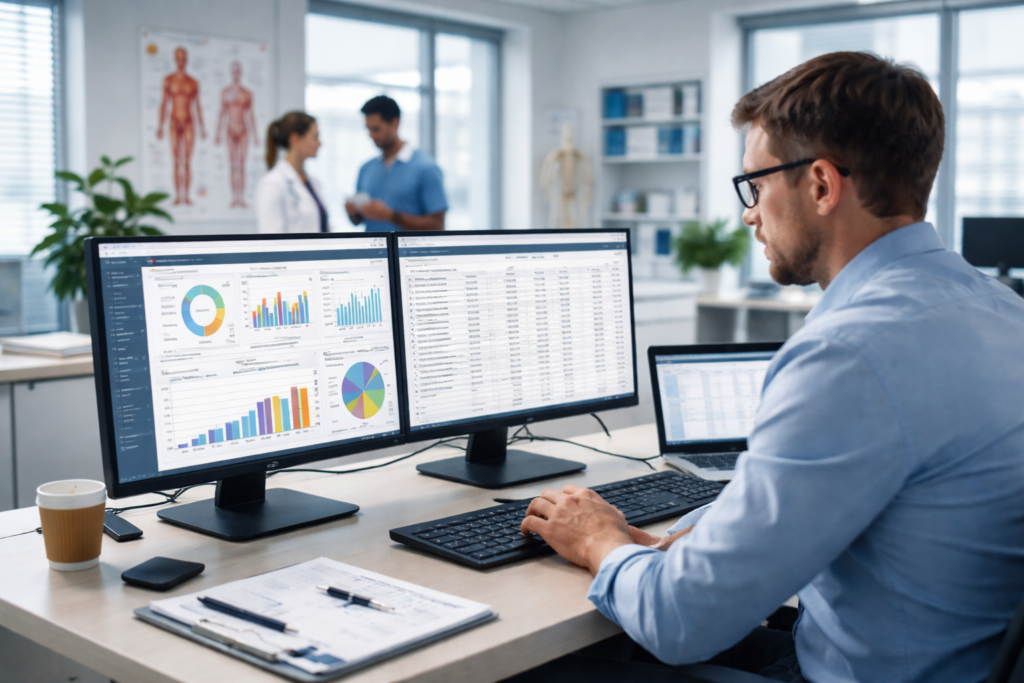
The day often begins by reviewing dashboards and reports generated overnight. These dashboards may track patient admissions, length of stay, readmission rates, or quality metrics tied to regulatory reporting.
Morning tasks may include:
- Reviewing data quality and resolving discrepancies
- Responding to urgent data requests from clinical or administrative teams
- Prioritizing analysis projects based on hospital needs
Much of this work aligns with common healthcare analytics applications across hospitals and health systems, where analytics supports operational and clinical decision-making.
Midday: Collaboration Across the Health System
Healthcare analytics is highly collaborative. Midday hours are often filled with meetings or check-ins with stakeholders across the organization, including:
- Physicians and nursing leaders
- Quality improvement teams
- Operations and finance staff
- IT and informatics professionals
A healthcare data analyst translates complex data into insights that non-technical audiences can understand, ensuring analytics support patient care and organizational goals.
Afternoon: Analysis, Modeling, and Reporting
Afternoons are often dedicated to deeper analysis. This may include building new reports, refining dashboards, or applying predictive analytics models to support forecasting and planning.
Common activities include:
- Writing SQL queries to extract healthcare data
- Creating visualizations to highlight trends
- Supporting predictive initiatives in healthcare analytics
These analyses can help hospitals identify trends, inform resource allocation, and support performance measurement.
Tools and Skills Used Throughout the day
Healthcare data analysts rely on a mix of technical and interpersonal skills, including:
- SQL and database tools
- Data visualization platforms
- Knowledge of EHR systems
- Communication and problem-solving skills
Because healthcare data is complex and regulated, professionals often develop additional training or experience in both analytics and healthcare systems.
Why Preparation Matters
Working as a healthcare data analyst requires more than general analytics skills. Understanding clinical workflows, healthcare regulations, and organizational structures is essential.
For those looking to gain specialized expertise, the University of South Florida’s Master of Science in Healthcare Informatics (MSHI) – Healthcare Analytics program offers a 100% online degree designed to prepare students to use data to improve patient care and pursue a meaningful career in healthcare analytics.
Learn more about USF’s MSHI Healthcare Analytics Master’s Degree and take the next step in your healthcare analytics career here.
(Source: https://www.himss.org/, visited April 9, 2026)